

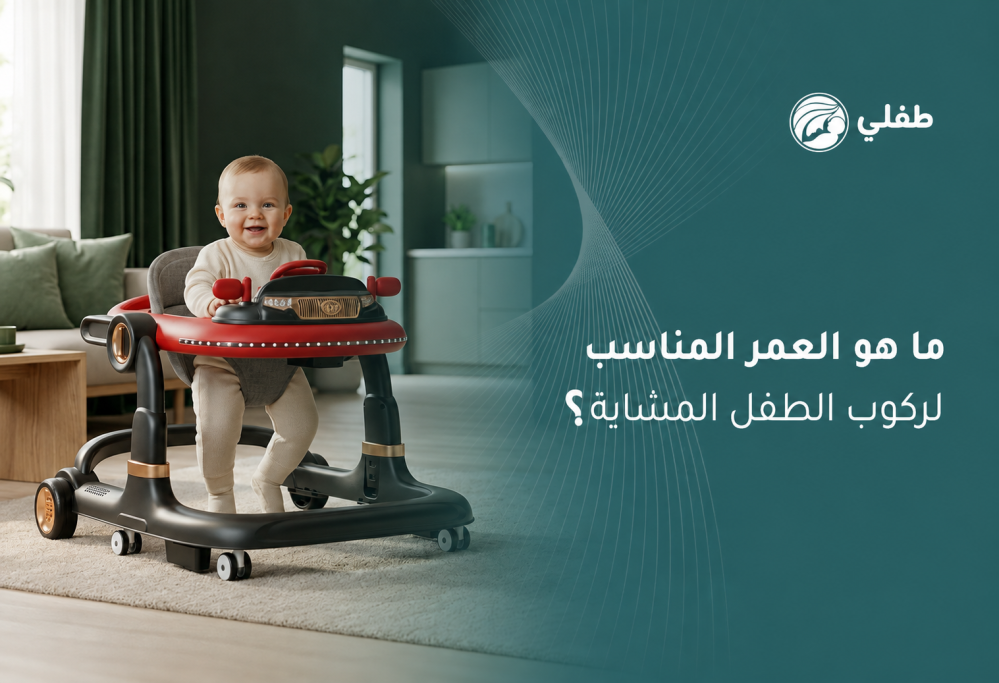
As the child begins to show interest in movement and exploring the world around them, many parents wonder about the right age for a baby to use a walker and whether it really helps them learn to walk.
With different opinions about the benefits and risks of walkers, choosing the right time to use one remains something that requires understanding the child’s needs and motor abilities at each age stage.
What Is the Right Age for a Baby to Use a Walker?
The right age for a baby to use a walker is not linked to a specific number only. It depends more on the child’s motor readiness, their ability to control their head, and their ability to sit with balance.
In general, most manufacturers set an approximate age range between 4 and 16 months, but actual use depends more on the child’s motor development than age alone, provided that the baby’s feet touch the floor correctly.
However, using a walker is not recommended if the child has already started walking, as it may reduce the time the child spends practicing crawling, standing, and balancing naturally.
When Is a Baby Ready to Use a Walker?
Understanding a child’s motor development stages helps determine the right age for using a walker more accurately. This can be explained through the following stages:
From 4 to 6 Months
At this stage, the child is still developing the ability to control the head and trunk. Many babies are also not yet able to sit steadily for long enough periods.
For this reason, using baby walkers is considered relatively early at this age, because the child needs to spend more time rolling and lying on the tummy to strengthen their core muscles.
From 6 to 8 Months
Some children begin to show more interest in movement and sitting, but readiness differs from one child to another. If the child loses balance easily or leans their body while sitting, it is better to focus on developing their natural motor skills before considering the use of a walker.
From 8 to 10 Months
The child is often more active during this period and may begin crawling or standing while holding onto furniture. These skills are an important part of the journey toward learning to walk.
In addition, the child needs space for free movement and natural balance development. At this stage, they also begin to develop the ability to move between sitting and standing positions with more independence and confidence.
From 10 to 12 Months
Some children at this age are able to take their first steps, while others continue to rely on support. As gradual walking begins to appear, the walker becomes less important compared with activities that help the child develop balance and control over foot movement.
After 12 Months
The child’s activity and movement speed increase noticeably, and they become more capable of moving and exploring independently. For this reason, the benefit of the walker gradually decreases, while the importance of providing a safe environment that allows the child to practice walking and movement naturally increases.
In addition, many children begin relying on their own steps and gaining more balance and confidence during daily movement.
However, many medical authorities confirm that providing a safe space for free movement, crawling, and standing is more beneficial for the development of the child’s natural motor skills.
What Should You Pay Attention to When Buying a Baby Walker?
Choosing the right walker is just as important as considering the child’s needs and age stage. Therefore, it is best to pay attention to a set of specifications before buying, including:
Make sure to choose a walker with a stable and wide base that helps improve balance and reduce the possibility of slipping during movement.
It is better for the walker to support more than one height level so it can adapt to the child’s growth and changing height over time.
Make sure the seat is comfortable and made from materials that are easy to clean.
It is preferable for the materials used in manufacturing to be strong and able to withstand repeated use without being affected quickly.
Using a baby walker with toys or interactive activities is an additional advantage, as it helps keep the child engaged and stimulates their senses.
In addition, there are other specifications:
If you move around or travel frequently, a foldable design may be a practical option for storage and carrying.
Make sure the walker is suitable for the child’s weight and the manufacturer’s recommended age to ensure safe use.
Do not rely on price alone when comparing options. Instead, review the safety features, manufacturing quality, and available features in each model.
When buying online, user reviews and the experiences of other parents may help you form a clearer idea of the product’s actual performance during use.
Paying attention to these details makes it easier to choose a walker that combines comfort and safety and better suits your child’s needs. A good product may also provide a more stable and suitable experience during the different stages of growth.
What Are the Signs That a Baby Is Ready to Use a Walker?
There are physical and motor signs that help determine whether the child is ready to use a walker or not. These signs include:
Head and Neck Stability
One of the most important indicators to pay attention to is the child’s ability to keep their head raised and control its movement well while sitting or standing with assistance. If the head leans forward or needs constant support, it is better to wait until this part of motor development is complete.
Sitting Without Assistance
When the child can sit alone for a suitable period while maintaining balance, this indicates improved strength in the back and abdominal muscles. The ability to turn around or hold toys while sitting without falling is also a positive sign of improved trunk control.
This shows that the child’s body has become more prepared to deal with different movement positions that require a greater level of stability and muscular coordination.
Bearing Weight on the Legs
This skill can be noticed when holding the child in a standing position, as they begin to rest on their feet and carry part of their body weight naturally. However, if the legs seem unable to support weight or the child quickly appears uncomfortable, they may not be ready yet.
Interest in Standing and Movement
Some children begin trying to stand while holding onto furniture or people around them. This behavior often indicates their desire to explore movement more, which is a stage that comes before walking for many children.
The child may also try to move sideways while holding onto furniture, which reflects the development of their ability to balance and control movement.
Ability to Reach Objects While Maintaining Balance
If the child can lean slightly to pick up a toy or move their body while sitting without losing balance easily, this reflects good development in muscular coordination and motor control.
Curiosity and Desire to Explore
Some children show clear interest in moving around and following what is happening around them. They also constantly try to reach nearby objects, and this desire may be an additional sign that they are ready to try new movement experiences under parental supervision.
A child’s motor readiness remains more important than sticking to a specific age when thinking about using a walker. Observing the development of their skills and their ability to control their body helps make a more suitable and safer decision for each child individually.
What Are the Best Types of Baby Walkers from My Baby?
If you are looking for a walker that combines safety, comfort, and practical design, My Baby offers a variety of baby walkers equipped with features that help support your child’s movement and keep them entertained while playing. The available options suit different ages and needs to give you a more confident and comfortable shopping experience. The most notable types include:
Multi-Feature Walker
This walker from My Baby is designed to give your child an enjoyable experience while moving, with a design that combines safety, comfort, and entertainment activities that help keep them engaged throughout the usage period. Its main features include:
Equipped with multiple wheels that help provide smoother and more stable movement inside the home.
Includes a front play panel with attractive shapes and colors that encourage the child to interact and pay attention.
The height can be adjusted to suit the child’s growth and different heights during the stages of use.
The padded seat provides good sitting support, with a design that helps keep the child comfortable while moving.
It includes a lower base designed for placing the feet, giving the child additional comfort when they stop moving.
Its foldable design makes it easy to store or move when needed without taking up much space.
The grey color with modern patterns gives the My Baby walker an elegant look that suits different tastes.
The frame is made in a way that provides good balance during daily use, with wide edges that help enhance stability.
This walker combines practical functions and entertainment elements in one design that suits the child’s needs during the exploration and movement stage. It also provides parents with an option that combines comfort and ease of use while paying attention to the essential safety factors. Order it now.
Red Multi-Feature Walker
If you are looking for a walker that combines elegant design and ease of use, this model offers a set of practical features that help provide a more comfortable experience for the child during the early movement stage. Its main specifications include:
A low-height design that helps the child sit and move with greater stability.
Equipped with multiple wheels that make movement smoother on different types of floors inside the home.
Includes colorful front toys that encourage the child to interact and stay engaged during use.
The seat is padded and provides good back support with comfortable sitting space.
The foldable frame makes storing or moving the walker easier when it is not needed.
The wide base provides better balance during daily movement.
The manufacturing materials appear durable and suitable for repeated use over long periods.
The calm colors with pink touches give the My Baby walker an attractive appearance that suits different tastes.
Its open design gives the child good space for movement while making it easy for parents to supervise.
This walker provides comfort and practicality in one design that meets the child’s needs during the early exploration stage. It also offers features that help parents choose a product combining ease of use with a modern and attractive look. Order it now.
Pink Multi-Feature Walker
With a design that combines an attractive look and practical features, this walker from My Baby provides a comfortable experience that helps the child enjoy movement and play at the same time. Its main features include:
A wide frame that provides better stability while the child moves inside the home.
Multiple wheels that help with smooth movement and balanced weight distribution.
A padded seat that provides comfortable support for the child during use.
Includes a front play panel that adds an entertainment element and encourages interaction and attention.
Equipped with a mechanism that allows height adjustment to suit different growth stages.
The front edges are designed to help reduce the impact of bumps during movement.
The manufacturing materials appear strong and suitable for repeated daily use.
A foldable design that makes it easy to store the walker in small spaces when not needed.
The calm colors and distinctive details give the My Baby walker a modern look suitable for children’s rooms.
Provides suitable sitting space that helps the child move more freely without feeling restricted.
This walker has a set of features that match the child’s needs during the first exploration stage. It is also a practical option for parents looking for a product that combines good functionality with an attractive design. Order it now.
When Is Using a Baby Walker Not Suitable?
A walker may be a suitable option for some children, but it is not appropriate in all cases. There are health conditions that require caution or delaying its use, including:
Premature Babies
When evaluating a premature baby’s readiness to use a walker, the corrected age is considered, not only the chronological age. If sitting skills and trunk control are still incomplete according to the corrected age, it is better to focus on floor-based motor activities that support natural development.
Muscle or Joint Problems
Using a walker may not be the most suitable option for children who have certain motor development disorders or bone and joint problems, such as hip dysplasia or muscle tone disorders. In these cases, the child may need a specialist evaluation to determine the most suitable tools for their physical abilities.
Weak Head and Trunk Control
Even if the child is close to the age of using a walker, being unable to hold the head steady or sit with balance is a clear sign that they are not ready for use. These skills form the foundation the body relies on to maintain a proper position during movement.
Using it at this stage may also push the child into uncomfortable positions that do not suit their current level of motor development.
Delay in Some Basic Motor Skills
If the child still has difficulty sitting, rolling, or bearing part of their weight on their legs, it may be better to give them more time to develop these skills before thinking about using a walker.
Homes with Risk Factors
The home environment plays an important role in the decision to use a walker. The presence of stairs, high thresholds, or uneven floors may increase the possibility of accidents, especially if it is not possible to create a safe and closed space for the child’s movement.
In addition, the walker’s ability to move quickly may allow the child to reach places that are difficult to monitor in a short time.
When the Doctor Recommends Not Using It
In some special health cases, the pediatrician or physical therapist may recommend relying on other alternatives that support the child’s motor development more safely and effectively according to their individual condition.
The decision to use a walker does not depend on age alone, but also on the child’s physical readiness and the surrounding environment. If there is any doubt about whether it is suitable, the opinion of a specialist doctor remains the best reference for making the right decision.
Are Baby Walkers with Wheels Safe?
Most pediatricians do not recommend using baby walkers with wheels at any age stage, because their design itself may increase the chances of injuries even when an adult is near the child. The risks of baby walkers associated with them can be explained as follows:
Falls and Sudden Accidents
A walker moves faster than the child can control, so it may reach the edge of the stairs or slip on an uneven floor within moments.
Bumping into furniture or thresholds may also cause it to overturn, making head injuries and fractures among the most commonly recorded accidents when using it. This is one of the main risks of baby walkers that has led many medical authorities to warn against them.
The Child Reaching Dangerous Places
The problem is not limited to the movement of the walker itself. It also gives the child the ability to reach things they would not have reached on their own. The child may pull an electrical cord, grab the handle of a hot pot, or pick up a cup containing hot drinks from a table, which significantly increases the risk of burns and household injuries.
A Few Seconds May Be Enough for an Accident to Happen
Many accidents do not happen because of negligence, but while parents are distracted for a few moments, such as answering the phone or opening the door. During these seconds, the walker can cover a short distance quickly, making timely intervention more difficult. For this reason, it is not considered a safe tool even with constant supervision.
Injury data shows that accidents related to baby walkers have continued for years, which explains why medical authorities continue to recommend avoiding them and relying on safer alternatives. Therefore, prevention begins with choosing the right tool for the child’s movement, not only by supervising them while using it.
Frequently Asked Questions
Can a Baby Walker Help Strengthen Leg Muscles?
Yes, it may contribute to a limited degree to using the leg muscles, but developing strength and balance mainly depends on natural movement such as crawling, standing, and walking.
How Many Times Can a Walker Be Used During the Day?
There is no fixed duration that suits all children, but it is better for the child not to spend long periods inside a walker or any device that limits natural movement. It is preferable for use to be limited to short periods while giving the child enough time to play and move on the floor.
Can a Walker Be Used on All Types of Floors?
No. A walker works better on level floors that are free from obstacles. Uneven or slippery floors may affect its stability and increase the possibility of stumbling or losing control of movement.
Does the Child Need Shoes When Using a Walker?
In most cases, shoes are not necessary inside the home while using a walker, especially if the floor is safe and clean. The child’s feet touching the floor helps them feel movement and balance better, which supports the development of their motor skills.
At What Age Should a Child Stop Using a Walker?
Usually, the need for a walker decreases when the child starts walking independently or becomes able to move with confidence without assistance. At this stage, relying on natural movement is more beneficial for developing balance and body control.
Does the Suitable Walker Differ According to the Child’s Size?
Yes. Choosing the right size is important to ensure the child’s comfort and safety. The walker should match the child’s weight and height and allow their feet to touch the floor correctly without excessive bending of the legs or an uncomfortable body height. It is also preferable to choose a walker with height adjustment so it remains suitable for the child as they grow and their motor abilities develop.