

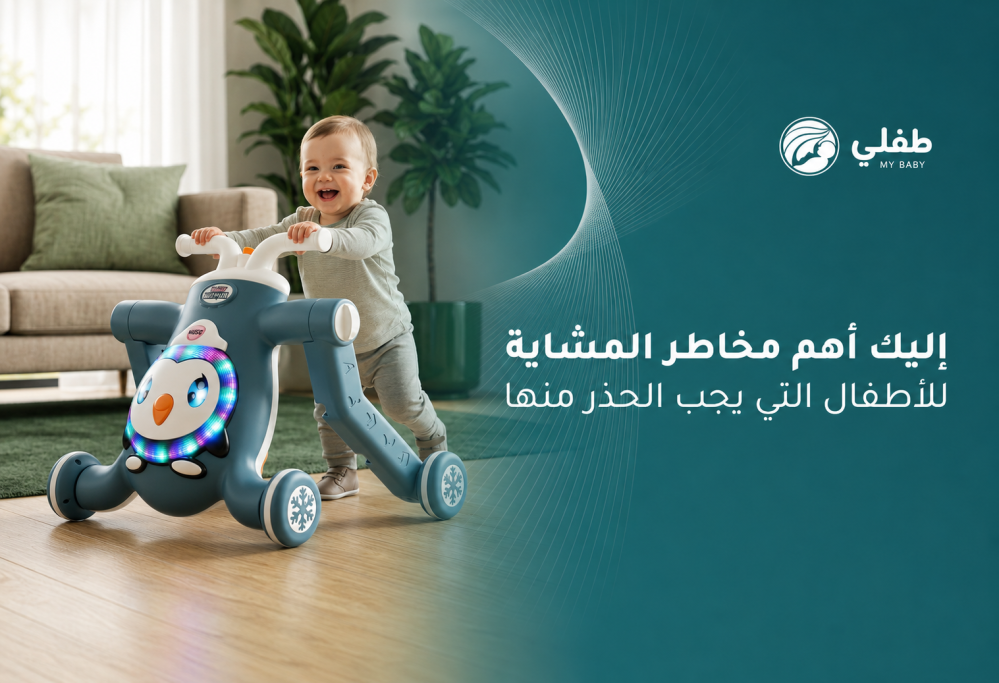
Parents are keen to choose tools that help their children move and discover what surrounds them, but some options may carry risks that many people do not notice.
The risks of baby walkers are among the topics that deserve attention, especially with the increasing medical warnings about their impact on a child’s safety and motor development. Therefore, it is important to understand the main risks and safer alternatives to make a decision that suits the child’s needs and protects their safety.
Why Do Parents Use Baby Walkers?
Many parents buy a walker because they believe it helps the child learn to walk faster. They also see it as a way to give the child a chance to move and explore what is around them in a way that seems enjoyable.
However, medical recommendations point to the need to balance these expected benefits with the risks of baby walkers and not rely on them as a main tool for developing walking skills.
What Are the Risks of Baby Walkers?
It is important to know some of the risks that baby walkers may cause when used incorrectly. These risks include:
Relying on a walker may delay the development of natural movement skills in some children, especially skills related to walking and crawling.
Spending a long time inside the walker reduces opportunities for free movement on the floor.
A walker gives the child greater ability to reach places and objects they could not reach before, which may increase the possibility of household accidents if the area is not properly secured.
Some children may lose their balance while using it.
Its fast movement may allow them to approach stairs or unsafe areas within a short time.
In some cases, the child may get used to a movement pattern that differs from natural walking, which is why experts recommend limited use under direct supervision.
Therefore, safety is not only related to the presence of baby walkers, but also to how they are used and how long the child stays inside them. It is always recommended to prepare a safe environment that allows the child to move and explore without being exposed to risks.
Why Are Baby Walkers Sometimes Considered Unsafe?
The risks of baby walkers are linked to their ability to move faster than the child, or the person watching them, can react in time. For this reason, accidents may happen within just a few seconds, even when one of the parents is nearby.
That is why medical authorities recommend avoiding their use and relying on safer alternatives that support the child’s growth and natural movement.
What Is the Effect of a Walker on a Child’s Bones and Joints?
The way a child stands inside a walker affects how weight is distributed on the legs and joints. Therefore, it is important to understand its effect on the development of the musculoskeletal system more accurately as follows:
Increased Pressure on the Feet and Legs
When using a walker, many children rely on the tips of their toes to push it forward instead of standing on the full sole of the foot. This pattern may lead to uneven weight distribution on the feet, knees, and hips, especially if use continues for long periods.
Muscle Strain Before Full Readiness
A child’s muscles in the first months are not prepared to carry body weight in this way. With repeated walker use, some muscles may become strained before gaining the needed strength through crawling and natural movement. This is one of the risks of baby walkers that makes excessive use worth avoiding.
Possibility of Foot Deformities
Using a walker does not mean that the child will definitely develop deformities or foot misalignment. However, some children may be more likely to develop minor issues if walker use starts too early or continues for long hours every day, especially when the child does not get enough free movement on the floor.
Giving the child the opportunity to crawl and stand gradually helps bones and muscles develop according to the natural stages of growth.
Bone and joint development remains linked to several factors, and a walker alone is not considered a direct cause of any problem. However, allowing the child to crawl and move naturally remains the option that better supports motor development according to medical recommendations.
What Are the Most Common Walker-Related Accidents at Home?
Although many parents ask about the appropriate age for a baby to use a walker, it is more important to know the injuries that may be associated with using it at home, even with continuous supervision. The most common accidents include:
Bumping into Furniture and Hard Corners
A walker gives the child a speed of movement that does not match their ability to control direction or stop. As a result, the child may bump into tables or furniture corners, which may cause bruises or injuries to the head and face.
The possibility of these accidents increases in narrow spaces or areas full of obstacles that are difficult for the child to avoid while moving.
Falling Down the Stairs
Stairs are one of the most dangerous areas when using a moving walker. The walker can reach them within seconds if there are no safety gates, and this may lead to serious injuries that require medical attention.
Reaching Sources of Danger Inside the Home
The child may be able to approach the oven, pull electrical cords, or grab cups and hot drinks that were previously out of reach before using the walker. These situations are among the most serious risks of baby walkers because they increase the possibility of burns and household injuries.
The Walker Tipping Over During Movement
The walker may lose balance if it hits an obstacle or if the child leans their body to pick up something nearby, increasing the risk of falling, especially on uneven floors.
Medical reports indicate that injuries related to baby walkers have led some countries to place restrictions on their sale or tighten their safety standards. Therefore, providing a safe environment for natural movement remains more beneficial for the child and less risky compared with using a walker.
Are There Safe Alternatives to Encourage a Child to Walk?
Yes, there are safer and more effective tools than walkers because they help the child gradually develop movement skills in line with their natural growth stages without exposing them to harm. The most important alternatives include:
Crawling and Building Muscle Strength
Crawling is one of the most important stages before walking. It helps strengthen the muscles of the arms, legs, and trunk. It also develops coordination between hand and eye movement and prepares the body to stand steadily.
In addition, it gives the child the chance to gradually explore their surroundings, which supports balance development and movement control before independent walking begins.
Providing Space for Movement on the Floor
Giving the child enough time to play on a safe floor prepared with a suitable rug encourages them to change positions freely and explore the surrounding environment by themselves. During this stage, the child also learns how to maintain balance and get up after falling naturally.
Using Push Toys
Push toys differ from moving walkers. The child walks behind them while relying on their feet, while the toy provides support that helps improve balance and control over steps without giving the child a speed that may expose them to injury.
Encouraging Standing Gradually
The child can be helped to stand while holding onto the sofa or one of the parents’ hands for short periods. Support can then be gradually reduced as the child gains more confidence in their ability to stand and take their first steps.
It is better to let the child follow their own pace without rushing them, because acquiring this skill differs from one child to another according to their natural growth rate.
A child does not need a walker to learn to walk at the right time. Healthy motor development mainly depends on natural practice and gradual skill acquisition. Choosing safe alternatives gives the child a better chance to build balance and muscle strength without being exposed to avoidable risks.
Is a Walker Always Harmful?
The risks of baby walkers are not related to their presence only, but to the duration and way they are used. They may not cause problems when used for a short time under direct supervision.
However, using them repeatedly as a substitute for natural movement may affect the child’s gradual development of standing and walking skills. Therefore, free activity on the floor remains the option that best supports motor development.
What Are the Best Safe Baby Walkers from My Baby?
At My Baby, you will find a selection of baby walkers made from high-quality materials and equipped with features that help enhance stability and reduce usage risks, so you can choose what suits your child with confidence and peace of mind. Some of the most notable types include:
Multi-Feature Walker - Red
If you are looking for a walker that combines a modern design with practical features, this type offers a set of advantages that make it more comfortable for the child to use. These include:
An attractive sporty design with coordinated colors that gives it a modern look suitable for different tastes.
A padded seat with a high backrest that helps provide more comfortable sitting during use.
Height adjustment to suit the child’s growth and different stages of use.
A wide base that gives the walker better stability while moving on level floors.
An interactive front panel with play elements that encourage the child to stay engaged and explore.
Smooth wheels that help the walker move easily and make direction control simpler.
Durable materials designed to withstand daily use, with easy cleaning for the seat and outer parts.
Choosing the right walker depends on manufacturing quality and the presence of essential safety features, in addition to correct use. It is always recommended to use it for short periods and under direct supervision to ensure the child’s safety. Order it now.
Multi-Feature Walker - Grey
This walker combines more than one function in a single design to give the child a comfortable space for sitting and playing, with several practical features suitable for daily use. The most important include:
A 2-in-1 design that allows the walker to be used with the option of pushing it using the rear handle when needed.
The padded seat provides comfortable support for the child’s back while sitting.
The upper canopy helps reduce direct exposure to sunlight in open areas.
The front play panel includes interactive elements that encourage the child to explore and play.
The circular base provides good stability and helps distribute movement in a more balanced way.
The height adjustment system allows the sitting position to be adjusted according to the child’s growth.
The wheels are designed to make movement smoother on level floors with easy steering.
This model offers a combination of comfort and practical features suitable for daily use when safety instructions are followed. Using the walker for short periods and under direct supervision remains the best option to protect the child’s safety. Order it now.
What Are the Main Safety Guarantees When Using a Walker?
When using a baby walker, it is important to follow safety guidelines because this reduces the chances of accidents. This can be achieved by following a set of simple steps:
Choosing a Walker That Meets Safety Standards
Make sure to buy a walker that meets approved safety specifications, such as having a wide base that gives it better stability or a system that limits its movement when approaching edges or stairs. It is also better to avoid old or unknown-source walkers because they may lack modern safety features.
Preparing the Home Before Use
Before placing the child in the walker, make sure the area is free from sources of danger. A walker gives the child greater movement ability, so the child should be treated as if they are walking on their own by closing stairs, securing hallways, and removing any obstacles that may block movement.
It is also better to install safety gates near stairs and move sliding furniture away to reduce the possibility of accidents inside the home.
Keeping Sources of Danger Out of the Child’s Reach
Do not leave electrical cords, hot pots, or tablecloths that can be easily pulled near the walker. In addition, it is better to remove unsecured rugs and toys scattered on the floor, because these simple details may increase the risks of baby walkers and lead to tipping over or hitting a sudden obstacle.
Never Leaving the Child Unsupervised
Having one of the parents in the same place is not enough if they are distracted. The child should be watched throughout the entire time they are using the walker and should not be left to move freely around the house, even if the surrounding environment seems safe.
Although following these precautions helps reduce the possibility of accidents, it does not eliminate them completely. For this reason, natural movement on the floor inside a secured space remains the option recommended by most medical authorities to support the child’s growth safely.
Does a Walker Affect When a Child Learns to Walk?
There is no evidence that a walker helps a child walk earlier. In fact, many medical authorities indicate that acquiring this skill depends more on the child’s natural development than on any assistive tool. This can be explained through the following points:
It Does Not Imitate Natural Walking
The child moves inside the walker by pushing it with their feet while receiving support from the seat. This position differs from real walking, which requires maintaining balance and gradually carrying body weight.
It Reduces Opportunities to Practice Basic Skills
When the child spends a long time inside the walker, the opportunities for crawling, sitting, and standing through their own attempts are reduced. These stages help strengthen muscles and improve balance before walking.
In addition, repeating these natural movements helps the child gain confidence in their motor abilities and become more prepared for walking in a more stable way.
Every Child Has Their Own Pace
Children begin walking at different ages, so a walker cannot be considered a tool that speeds up this stage or determines its timing. The risks of baby walkers also make relying on them an option that many health institutions do not recommend.
Walking develops as a result of muscle and nervous system maturity, along with daily practice of natural movement, not because of walker use. Therefore, giving the child a safe space for exploration remains the option that best supports acquiring this skill with confidence.
Are There Signs That a Child Is Ready to Learn Walking?
Yes, a child shows a set of signs that reflect the development of their motor abilities and indicate that they are approaching the walking stage. It is better to observe these signs before considering any assistive tool. The most important signs include:
Standing with Support
The child begins trying to lift their body and stand while holding onto a sofa or a piece of furniture, with the ability to maintain balance for a short time. This is an important step in building muscle strength. With repeated attempts, their control over standing gradually improves, preparing them to take their first steps with greater stability.
Moving Along Furniture
After gaining some stability, the child tries to move sideways while holding onto furniture. This helps improve balance and teaches them how to shift body weight from one foot to the other in preparation for walking.
Improved Balance Control
The child becomes more able to sit, stand, and move between different positions with confidence, while losing balance less often compared with previous months. This appears in their ability to change body position smoothly and gradually rely on themselves during movement without needing constant support.
When these signs appear gradually, this indicates that the child’s development is progressing naturally without the need to rely on a walker. Giving the child enough time for movement and exploration in a safe environment helps them acquire walking skills with confidence and independence.
Does the Walker’s Effect Differ Depending on the Type of Floor?
Yes, the nature of the floor directly affects how the walker moves and how stable it is. This can be explained as follows:
Smooth Floors
The walker moves faster on smooth surfaces such as ceramic or marble. The child may find it difficult to control its direction or stop it in time. As movement speed increases, the time available for one of the parents to intervene decreases if the child approaches any source of danger inside the home.
Carpets and Raised Edges
A thick carpet or its edges can obstruct the wheels, which may cause the walker to stop suddenly or tilt when crossing edges.
Uneven Floor Levels
Thresholds, room dividers, and uneven surfaces create obstacles for walker movement and may cause it to lose balance if it hits them while moving.
For this reason, it is recommended to avoid using it in areas where floor levels change or where there are many small obstacles that may block wheel movement.
Choosing the Place of Use
Even when using a good walker, it is better for movement to be inside a level space free from obstacles, while avoiding hallways leading to stairs or areas with slopes, because this helps reduce the risks of baby walkers.
The level of safety does not depend on the walker’s design alone; it is also affected by the surrounding environment and how it is used. Therefore, preparing a suitable place for movement reduces the chances of accidents, but it does not replace direct supervision of the child.
Is a Moving Walker Different from a Stationary Activity Center?
Yes, each one differs in how it is used and how much freedom of movement it gives the child. It is useful to know the differences between them before making a purchase decision. The main differences include:
Freedom of Movement Around the Home
A moving walker allows the child to move from one place to another, which increases the possibility of reaching stairs, the kitchen, or any areas that may be dangerous if not properly secured. This explains part of the risks of baby walkers.
Nature of Use
In contrast, stationary activity centers keep the child in one place during play, while allowing them to rotate and interact with the toys fixed around them without moving freely around the house.
Supporting Exploration in a Different Way
Activity centers provide an entertaining environment that helps the child develop some sensory and fine motor skills. However, they are not a way to teach walking or a substitute for natural movement on the floor.
The Effect of Each on Safety Level
A moving walker increases the child’s movement range, which may raise the possibility of accidents if the surrounding environment is not fully secured. Stationary activity centers limit the child’s movement between rooms, so the chances of reaching sources of danger inside the home are reduced.
Supporting Child Development Better
Although activity centers may provide space for play and interaction for a short time, they, like walkers, do not replace the importance of free movement on the floor. Specialists confirm that crawling, sitting, and standing independently remain the most beneficial activities for developing balance, muscle strength, and walking skills naturally.
For this reason, many specialists recommend relying on free movement inside a safe environment to support the child’s motor development, while using activity centers as a form of entertainment for limited periods when needed.
However, if the choice is between the two types, stationary activity centers are less exposed to the risks of moving around the home compared with moving walkers.
Frequently Asked Questions
Can a Walker Be Used with a Premature Baby?
No. This depends on a pediatrician’s evaluation, not only the child’s age, because premature babies may have different muscle and nervous system development compared with babies born at full term.
Does the Duration of Walker Use Affect the Level of Risk?
Yes. The longer the child stays inside the walker, the higher the possibility of being affected by reduced free movement on the floor. The chances of household accidents also increase if the child moves quickly inside the space. Therefore, if parents decide to use it, it is better for this to be for very short periods with continuous supervision.
Can the Walker Be Cleaned and Maintained to Keep the Child Safe?
Yes. Taking care of the walker is not limited to cleaning the seat only. It also includes checking the wheels, making sure the screws are secure, checking the base, and ensuring there are no broken parts or sharp edges.
Do Safety Standards Differ Between Types of Baby Walkers?
Yes. Not all walkers have the same level of safety. Modern models often come with a wider base, systems that help limit movement when approaching edges, and features that provide better stability during use.
When Should Walker Use Be Stopped?
It is better to stop using it once the child begins standing steadily, trying to walk independently, or becomes able to move quickly inside it in a way that is difficult to control.