

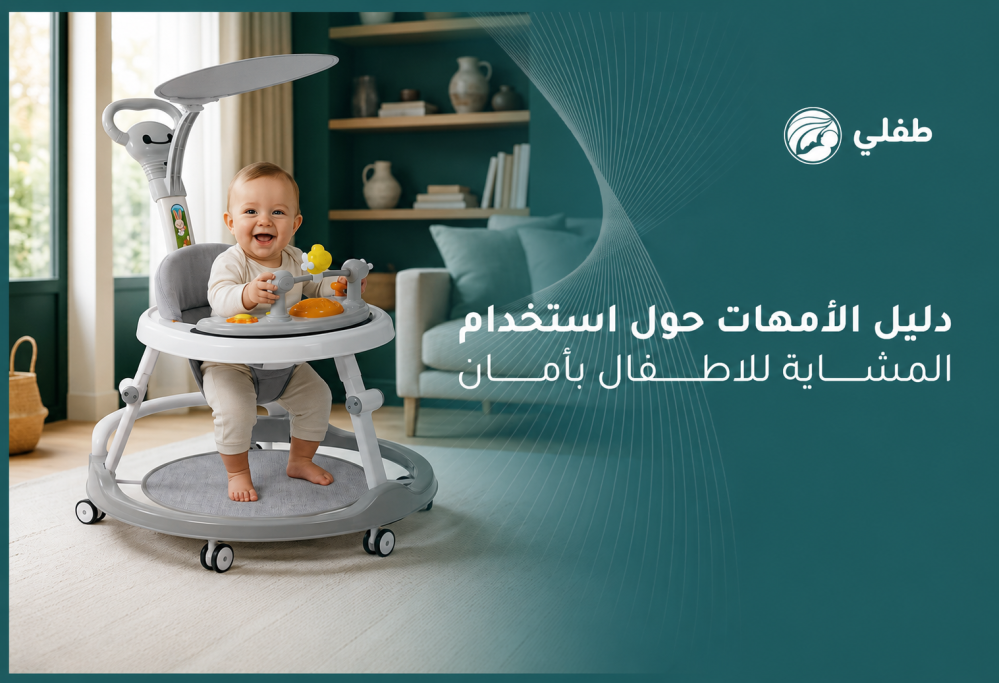
As your baby approaches the stage of movement and exploration, parents begin looking for ways to help their child discover the world around them with confidence and safety. Using a baby walker is one of the options many parents turn to in order to support this early stage, as it gives the baby a chance to move around and interact with their surroundings in an enjoyable way.
With the different opinions about its benefits and the correct way to use it, it becomes important to understand its main advantages and the precautions related to it to ensure a safe and suitable experience for the child.
What Is a Baby Walker?
A baby walker is a tool designed for children in the early stages of movement. It allows them to move around the house while seated in a supported position.
It consists of a seat fixed inside a frame with wheels, allowing the child to push with their feet and move in different directions without needing direct help.
What Are the Different Types of Baby Walkers?
Baby walkers are available in several designs to suit different needs and developmental stages. The main types include:
Traditional Walker
This type is based on a seat fixed inside a frame with wheels, allowing the child to move by pushing their feet against the floor. Many parents prefer it because it gives the child more freedom to move within safe spaces. Some models also come with toys and entertainment activities.
However, using it requires constant supervision, and relying on it too much may reduce the time the child spends crawling and exploring natural movement.
Sit-to-Stand Walker
This type is designed to suit more than one age stage. It can first be used as a seated activity center, then later turns into a support tool when the child stands and pushes it while walking.
One of its main advantages is that it offers longer use compared with traditional types, but it is often more expensive because of its multiple functions and features.
Push Walker
This type comes in the form of a toy with a handle that the child holds while walking. It helps the child practice their first steps while maintaining a movement posture that is closer to natural walking.
Many specialists prefer this type because it encourages the child to rely on their balance while moving. However, it may require a stable floor and may not provide the same level of support offered by some other types.
In general, there is no single type that suits all children. Choosing a walker depends on the child’s age, motor stage, and method of use.
What Is the Right Age to Use a Baby Walker?
You can consider using a baby walker when the child becomes able to stand while holding onto furniture or nearby objects, as this indicates that they have gained a certain level of strength and balance. Using it at a very early age is not recommended.
For this reason, many specialists recommend waiting until the child is around 10 months old, or according to their individual motor development.
What Are the Benefits of Baby Walkers?
The benefits of baby walkers are among the reasons they are a popular choice for many parents. Some of the most important benefits include:
Encouraging Interaction and Attention
Many walkers come with entertainment elements and simple toys that attract the child’s attention for short periods. This helps the baby interact with different colors, sounds, and movements, while giving them the opportunity to explore and play while seated inside the walker.
Supporting the Experience of Standing and Movement
When the child begins relying on their feet, a walker may help them become familiar with the standing position and moving within safe spaces. This may encourage some children to gain more confidence during their first movement attempts.
Providing More Space for Exploration
At this age, curiosity is an essential part of the child’s development. A walker gives the baby a chance to move around and observe what is happening around them from different angles, expanding their interaction with the surrounding environment.
It also helps them reach new places within the space assigned to them, which supports their natural desire to explore and learn about the things around them.
Despite these benefits, using a baby walker remains linked to the child’s age and motor readiness. Moderate use and following safety guidelines remain the most important factors for benefiting from it safely.
What Are the Disadvantages of Baby Walkers?
Although baby walkers are commonly used, excessive use or incorrect reliance on them may be linked to some disadvantages that deserve attention, including:
Some children may acquire walking or crawling skills later than others as a result of repeated reliance on the walker.
Spending long periods inside the walker reduces the time the child needs for movement on the floor, which is an important stage for strengthening muscles and developing balance.
It gives the child greater ability to reach things that may normally be out of reach, increasing the possibility of household accidents if supervision is absent.
If used in an unsafe environment, the child may bump into furniture or fall, especially near stairs or elevated areas.
Therefore, safety is not related to the presence of the walker itself as much as it is related to the way it is used and the time allocated for it. In addition, preparing the surrounding area and continuously monitoring the child help reduce many potential risks.
What Precautions Should Be Considered When Using a Baby Walker?
To ensure the highest level of safety when using a baby walker, it is recommended to follow several simple guidelines that reduce the possibility of accidents:
Make sure to place the walker on a firm and level floor to avoid tilting or unexpected movement.
Keep it away from stairs and areas where water collects, as these areas are among the most dangerous for the child.
Do not leave the child alone while inside the walker, even for a short period.
Make sure to remove sharp tools and breakable objects from the movement area, and move heavy items to safe places.
It is better to delay using it until the child can sit steadily and control their head well.
Keep the usage time limited, because staying inside the walker for long periods is not the best option for the child’s motor activity.
Following these precautions helps make the walker experience safer and more comfortable for the child. In addition, continuous supervision and preparing the surrounding area remain among the most important prevention factors during use.
Does the Type of Walker Affect the Child’s Walking?
Yes. The effect of the walker is not limited to its use only; its design and quality may play a role in the child’s comfort and safety during movement. This can be seen through the following:
A well-designed walker provides better body support, which helps the child move with greater stability during this stage.
Having a suitable backrest helps maintain a more comfortable sitting posture.
Balanced wheels provide smoother movement on different surfaces while reducing the chances of slipping or sudden movement.
Unstable or fast-moving walkers may negatively affect the child’s balance and increase the chances of stumbling.
It is important to choose a walker that suits the child’s age and current motor abilities, because matching the product to the child’s developmental stage is an essential factor for safe use.
When choosing the right walker for your child, it is better to focus on safety factors and manufacturing quality more than appearance or secondary additions.
A walker cannot be relied on alone to teach a child how to walk, but it may be a helpful tool when used correctly. Choosing a safe model suitable for the child’s age remains one of the most important things to consider before buying.
How Do I Choose the Right Walker for My Child?
Choosing the right walker does not depend only on appearance or price. It is linked to a set of specifications that help provide a safer and more comfortable experience for the child, including:
Look for a walker that provides good body support so the child remains in a comfortable position while sitting and moving.
It is better for it to have height adjustment to suit the child’s growth and help them touch the floor.
Choose a model with a stable base and balanced wheels that make movement easier without moving too quickly.
Make sure the materials used are good and free from harmful substances or edges that may cause unwanted injuries.
In addition, there are other factors:
It is better for the fabric parts or seat to be easy to remove and clean to maintain daily hygiene.
Check the comfort level inside the seat, as a comfortable design gives the child more freedom of movement without feeling restricted.
Check for approved safety certificates or specifications confirming that the product has passed basic safety tests.
When thinking about using a baby walker, safety and age suitability remain among the most important factors to focus on before making a purchase decision. A good walker is one that combines comfort and stability and suits the child’s needs at their current motor development stage.
What Are the Best Types of Baby Walkers from My Baby?
At My Baby, you will find a selected range of the best baby walkers designed to give your child a safe and enjoyable experience during their first steps, with high-quality materials and ideal movement support. Some of the most notable walkers include:
Multi-Feature Walker
This walker comes with a practical design that combines comfort and ease of movement, making it a suitable choice for children in the early stages of exploration. Its main advantages include:
A padded seat that gives the child a more comfortable sitting experience during daily use.
Equipped with multiple wheels that help with smooth movement inside the home.
Includes simple front toys that encourage the child to interact and stay engaged while seated.
Its wide frame provides a good level of stability and reduces shaking while moving.
It can be folded or height-adjusted in many similar models, making it easier to store and use according to the child’s needs.
Its open design gives the child suitable space to move their feet freely while moving.
If you are looking for a walker that combines comfort and practical design, this type is one of the popular options among many parents. Order it now.
Multi-Feature Walker
This walker features a design that considers the child’s comfort during movement and play. This can be noticed through several practical details, including:
A wide seat that provides good support for the child during short usage periods.
A wide lower frame that helps enhance stability while moving.
Wheels distributed in more than one direction to make movement easier inside home spaces.
A front play panel that adds an entertainment side and encourages the child to interact and pay attention.
A foldable frame that makes it easy to store the walker when not needed.
A suitable height that allows the child to move their feet naturally while seated inside the walker.
Easy-to-clean outer materials that withstand repeated use.
This walker combines the basic functions most parents look for when choosing their child’s essentials. The presence of comfort, stability, and entertainment elements in one design makes it a practical option for daily use. Order it now.
Multi-Feature Walker - Grey
This multi-use walker offers a combination of comfort, movement, and entertainment, which appears in the following practical features:
A padded seat that provides comfortable support for the child while sitting during the recommended usage periods.
Equipped with an upper canopy that helps reduce direct exposure to light in some environments.
Includes simple front toys that encourage the child to interact and stimulate their attention during play.
A wide circular base that provides a good level of balance during movement.
Smooth wheels that make it easier to move on level floors inside the home.
A design that allows the child to move their feet freely and participate more in exploring their surroundings.
The rear handle can be used in some similar models to make control or guidance easier when needed.
If you are looking for a walker that combines comfort, modern design, and some practical additions, this type may be one of the suitable options. Order it now.
Is a Baby Walker Safe?
A walker is not considered an ideal way to teach a child how to walk, as some people believe. Many medical opinions suggest that using it may affect the development of some natural motor skills when relied on excessively.
Using a baby walker may also push the child to move in a way that differs from the natural walking pattern, reducing opportunities to practice balance, crawling, and independent standing. These are essential stages that help build muscle strength and motor coordination properly.
However, using it moderately at the right age, while choosing a safe model that meets safety standards, may provide the child with an enjoyable space for movement and exploration under parental supervision, without replacing the natural stages of motor development.
How to Use a Baby Walker Safely
Following some simple guidelines helps make a baby walker safer and more comfortable during daily use periods. The most important guidelines include:
Keep the child under observation throughout the time they are inside the walker.
Use the walker on a straight and stable floor, away from stairs and slopes.
Keep the usage time short so the opportunities for natural movement and crawling are not reduced.
Adjust the height so the child’s feet touch the floor easily without pressure or excessive stretching.
Check the condition of the wheels and fixing parts regularly to ensure they are safe.
Do not rely on the walker as a replacement for the essential motor activities the child needs at this stage.
When used correctly and in a safe environment, the walker can provide enjoyable time for the child during exploration and play. Maintaining balance between using it and giving the child freedom of natural movement remains the best option for supporting healthy motor development.
What Is the Ideal Time a Child Should Spend in a Walker?
It is better for the child not to spend too much time inside the walker, as recommendations suggest that moderate use for short periods is the most suitable option to support motor development.
Usually, one session should not exceed 30 minutes at a time, while allowing enough time for crawling and free play on the floor. Using a baby walker in a balanced way helps benefit from its advantages without affecting the development of natural motor skills related to walking and exploration.
When Can I Say My Child Is Late in Walking?
The timing of walking differs from one child to another, but there are some signs that may require closer monitoring of the child’s motor development, including:
Reaching 18 months of age without clear attempts to stand or walk.
Inability to stand while holding onto support or maintain balance for a short period after the age of one year.
Weak desire to move or explore the place compared with children of the same age.
Absence of basic motor skills such as independent sitting or crawling during the expected developmental stages.
Noticeable difficulty moving the legs or problems that affect balance and motor coordination.
Although using a baby walker may give the child a chance to move, it is not a measure for judging walking development. When a clear delay in acquiring motor skills is noticed, it is better to consult a pediatrician for an accurate evaluation.
What Are the Signs That Children Are Ready to Walk?
A child shows several signs that indicate they are approaching the walking stage and gaining more independence in movement. The most notable signs include:
They begin trying to stand while holding onto furniture or nearby edges.
Their desire to climb and reach new places inside the home increases.
They move between fixed objects while holding onto them to maintain balance while moving.
Temporary changes in sleep or mood may occur due to rapid motor development.
They respond to help while walking and tend to take short steps when their hands are held.
They can stand for a few moments without needing direct support from those around them.
Although the speed of motor development differs from one child to another, the appearance of these signs is a positive indicator that their first steps are approaching.
Frequently Asked Questions
Can a Walker Be Used for Children with Motor Delay?
It is not recommended to rely on a walker as a therapeutic tool for children with delayed motor development unless after consulting a doctor or physical therapist.
Some cases require specific exercises and activities that help strengthen muscles and improve balance, while a walker may not provide the desired benefit and may delay the acquisition of some natural motor skills.
Does a Walker Help Strengthen Leg Muscles?
No. Some parents believe that a walker directly strengthens leg muscles, but gaining muscle strength depends more on crawling, standing, and free movement on the floor.
How Do I Know If the Walker Height Is Suitable for My Child?
The walker height is suitable when the child’s feet touch the floor comfortably and they can push themselves without needing to stretch their toes excessively or bend their knees in an unnatural way. Adjusting the height correctly helps provide a more comfortable and safer position during use.
Can a Walker Be Used Daily?
A walker can be used daily for short periods while following safety guidelines and avoiding excessive usage time.