

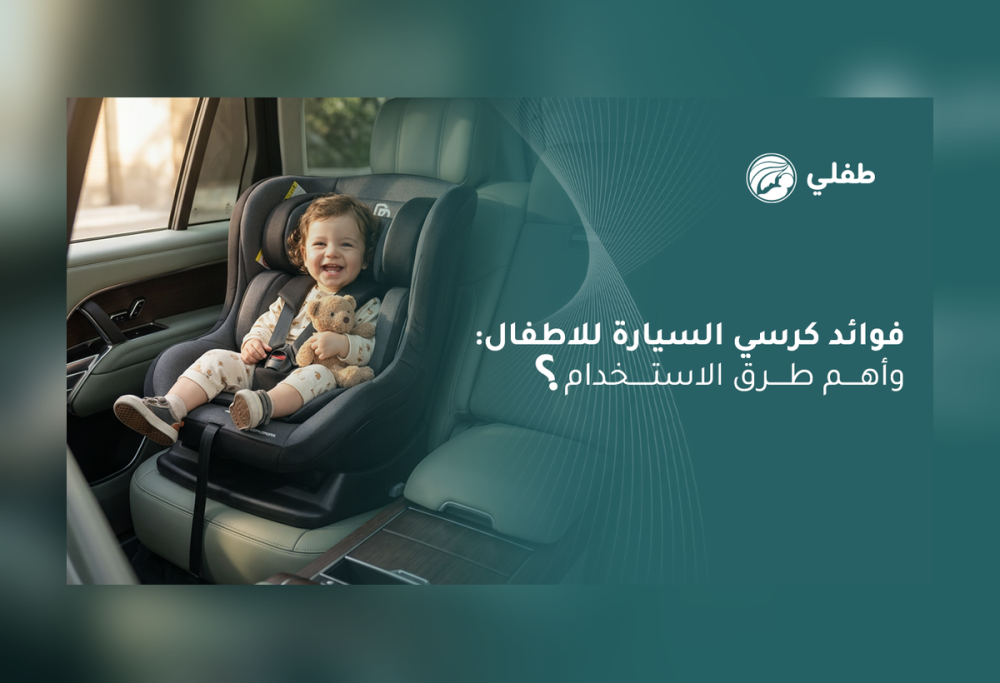
Choosing the right products has become a non-negotiable priority to ensure your child's comfort and safety, and that's where My Baby comes in, offering a diverse range of baby supplies designed to meet the needs of the modern family with the highest quality standards.
Among the products that receive great attention from parents, car seats for children stand out, especially with the increasing awareness of the importance of safety during travel and understanding the benefits of a car seat for children, which lie in providing protection and comfort during daily trips and travel; making My Baby a reliable destination to get the best options suitable for each age stage.
What are the benefits of a car seat for children?
The importance of a child car seat is not limited to providing comfort during travel; it is also one of the most important means of protection that reduces the risk of serious injuries in the event of accidents, especially given the different needs of each age group. Therefore, it is advisable to choose a child car seat according to age to ensure the highest levels of safety. Among the most important benefits of a child car seat are:
- It reduces the likelihood of serious injuries when exposed to sudden shocks.
- It provides balanced support for the head, neck, and spine, which are the most sensitive areas of a child's body.
- It helps to distribute the shock force better, thus limiting its impact on the child's body.
- It prevents the child from being pushed or slipping inside the vehicle during sudden stops or accidents.
- It provides a more secure fastening compared to using adult-only safety belts.
- It promotes proper sitting posture during short and long journeys.
- It gives parents more peace of mind by providing a safer travel environment for children.
- It meets modern safety standards specifically designed to protect children of all ages and weights.
What is the difference between using a car seat for children and not using one?
The difference between using a car seat for children and not using one lies in the following:
When using a car seat for children
- The child is secured in a safe position appropriate to his age and size.
- It helps to absorb part of the impact force and reduce its effect on the head, neck, and spine.
- It prevents the child from being thrown or colliding with the interior components of the car.
- It provides better support than adult-sized seat belts.
When not using a car seat for children
- The child becomes more susceptible to violent movement inside the vehicle during accidents.
- Adult belts do not provide adequate protection for children due to differences in size and body structure.
- The likelihood of suffering serious head, neck, and chest injuries increases.
- In severe accidents, the risk of hitting seats or glass, or even being ejected from the vehicle, increases.
Therefore, using a car seat is not limited to complying with safety instructions; it is one of the most important preventive measures that enhances child protection and reduces potential risks during travel.
Traffic laws regarding child car seats in Saudi Arabia
In order to enhance the safety of children while traveling, the Kingdom of Saudi Arabia has approved a set of traffic regulations that require the use of child safety seats according to age, height and weight, in line with modern international standards for child restraint systems inside vehicles.
Requirements for using child seats
Traffic regulations require parents to provide a suitable safety seat for children during the age stages that require it, with an emphasis on them sitting in the back seats and not moving to the front seat before reaching the permitted age.
The regulations also emphasize choosing a seat that is appropriate to the child’s physical characteristics and ensuring that it is installed according to approved safety instructions, in order to reduce serious injuries resulting from traffic accidents.
Key requirements:
- Use a safety seat that is appropriate for the child's age, weight, and height.
- The back seats are designated for children of legally specified ages.
- Prevent the installation of rear-facing seats in front of active airbags.
- Adhere to the installation mechanisms recommended by the manufacturers.
- Regular exceptions should be considered only in special cases.
Penalties for violations
Traffic regulations are not limited to raising awareness; they also include imposing penalties on violators to ensure compliance with safety procedures. Violations include not using a child seat, allowing a child to sit in an undesignated place, or ignoring the requirements for secure installation.
These measures aim to raise the level of protection inside vehicles and reduce the effects of accidents, while continuing to develop regulatory frameworks in line with the latest internationally approved safety standards.
What is the appropriate age to use child car seats?
Starts to use A car seat for children is used from the first months of an infant's life and continues until the child is able to use a regular seat belt safely, in accordance with approved age, height, and weight standards.
The benefits of a car seat for children lie in providing a level of protection that is appropriate to the child’s physical development at each age stage, ensuring better support for the head, neck and body during journeys. This is why many parents wonder at what age a child should be placed in a car seat? The answer is that using a specialized seat is recommended from birth, with the need to choose the appropriate type for each stage of development.
As the child grows older and acquires movement and balance skills, one can look into The benefits of baby walkers include learning about aspects related to the development of motor activity and exploration at this stage.
When can a child seat be dispensed with?
- When the child reaches the height and weight that allows the safe use of a traditional seat belt.
- When the belt is properly secured to the shoulder, chest, and pelvis, there is no need for a supportive seat.
- After confirming that the child's condition complies with the regulatory requirements for traffic safety.
What age groups should sit in a child seat?
Safety requirements include all children whose physical structure is still not suitable for using adult seat belts, as the types of seats vary according to age, weight and height to ensure the highest levels of protection.
The benefits of a car seat for children are most evident during their early years of development, as it provides better restraint and reduces the impact of potential collisions compared to relying solely on traditional harnesses. Therefore, safety guidelines recommend determining which children should be transported using special child seats based on their age and physical characteristics, not just their age. Some of the most important groups that need a child seat include:
- Infants and newborns in rear-facing seats.
- Young children who need safety seats equipped with internal harnesses.
- Older children who still need booster seats.
- All children who have not reached the appropriate height to safely use a traditional car seat belt.
Therefore, My Baby website offers many models and types that suit these different categories and provide them with the necessary support and complete safety throughout the journey.
What types of car seats are there for children?
The types of car seats for children vary according to age, weight, and developmental stage. Choosing the right type contributes to achieving maximum safety and benefiting from the advantages of a car seat for children at each age. Some of the most important types of car seats for children include:
Infant car seat (Rear-Facing):
This type is the ideal choice from birth to the early years of life, as it is designed to be oriented backwards in order to provide extra support for the head, neck and spine in the event of sudden stops or accidents.
It is recommended to use a car seat for newborns during this stage because it provides the infant with protection that is appropriate to the nature of his body and the sensitivity of his physical structure; thus enhancing the benefits of the car seat for children to reduce the risk of serious injuries.
Convertible Car Seat:
The convertible seat is distinguished by its ability to be used for more than one age stage, as it starts in a rear-facing position and can later be converted to a forward-facing position as the child grows.
It is a practical option for families looking for a seat that lasts longer without having to be changed frequently. To ensure you get the full benefit of the child car seat, you should follow the manufacturer’s instructions when switching between the two positions.
Booster seat:
This type is used for older children after they have passed the stage of seats equipped with internal belts, as it works to raise the child's sitting level so that the seat belt is properly aligned with the shoulder, chest and pelvis.
One of the most important benefits of a child car seat is improving the effectiveness of the car seat belt and reducing the chances of injury during collisions. Some models are available with a high back that provides additional support for the head and sides, while other options offer greater flexibility in use. It is important to follow the recommended Juniors car seat installation method to achieve the highest levels of safety.
Therefore, My Baby website offers many types of car seats for children to suit the needs of every family, with matching colors and high quality.
When does the transition from one stage to another occur in car seats?
The transition from one stage to another depends on several criteria, the most important of which are weight and height. Age is not a measure at all. Therefore, global safety organizations such as the NHTSA and IIHS have recommended adhering to safety standards at each stage. They have also recommended the length of time the child remains in the rear-position stage to protect them from impacts. The transition from one stage to another can be done as follows:
- When a child weighs more than 13 kg or their head reaches higher than the infant seat, they should immediately move to a convertible seat.
- When a child's growth reaches 13 to 18 kilograms, the transition from the rear position to the front position can be made.
- When a child weighs more than 25 kilograms, they can move from the front seat to the booster seat, but it is necessary to make sure that the seat belt passes smoothly and easily over the child’s chest and shoulder.
- The booster seat can be dispensed with when the child reaches a height of 145 cm, in which case a regular seat belt can be used.
Common mistakes when using child car seats
The benefits of a child car seat are only realized when used correctly, as some incorrect practices can reduce the level of protection or render the seat completely ineffective in the event of an accident. Some of the most common mistakes include:
Incorrect seat installation
Improper installation is one of the most serious mistakes that threaten a child's safety, as it may cause the seat to move or lose its stability during sudden stops or collisions. Common mistakes include not fastening the belts properly, ignoring the designated fastening points, or choosing an unsuitable installation angle.
Therefore, adhering to the correct method for installing a child car seat is an essential step to maximizing the safety benefits that the seat provides.
Choosing a seat that is not suitable for the child's age or weight
Using a seat that is larger or smaller than the child's actual needs may reduce the level of protection designed for that age, as seats designed for infants differ in their design and support from seats intended for older children.
Therefore, age, height, and weight must be taken into account when purchasing, and this applies especially when choosing a car seat for a child from the age of one month, as the infant needs safety specifications that are compatible with the nature of his physical development and the sensitivity of his organs.
Prioritizing price over safety standards
Focusing solely on price without checking the quality of the seat or its compliance with approved safety specifications may lead to acquiring a product that does not provide the required protection.
Although various types of cheap car seats for children are available in the market, priority should be given to safety standards, official certifications, and quality of installation before any other considerations.
Ignore infant needs during use
Some parents believe that all children's seats are the same, while infants need special head and neck support and a thoughtful sitting posture.
Also, improper use for extended periods or incorrect adjustment of the belts may lead some to wonder about the harm of the car seat for infants, while the problem is often caused by misuse and not by the seat itself.
To provide more comfort and soothe the baby outside the car, you can check out the best baby rockers to learn about options that take into account physical support and daily needs in the first months.
Allowing the child to sit in the front seat early
One of the most serious mistakes is moving a child to the front seat before the recommended age, as the front airbags and impact force increase the likelihood of serious injuries. This is why the answer to the question of why car seats are important for young children becomes clear: having a child in their designated seat in the back seats provides them with a higher level of protection compared to any other place inside the vehicle.
The scientific basis that supports the use of child seats
The safety standards adopted in the Kingdom of Saudi Arabia were based on international regulations and specialized field research supported by real-life accident data, with the aim of providing the highest levels of protection for children while on the move.
The results showed that rear-facing seats provide exceptional protection for infants during the first two years by 80%; while convertible and booster seats contribute significantly to reducing head and chest injuries in older children by 50 to 70%.
Studies have also shown that higher rates of compliance with the use of these seats are associated with a clear decrease in child deaths and injuries resulting from traffic accidents. These results clearly reflect the benefits of the car seat for children and its pivotal role in promoting safety, making compliance with its use an essential part of child protection and not just an additional precautionary measure.
Criteria for choosing the ideal car seat for children
Maximizing the benefits of a child car seat depends on choosing the right seat according to a set of criteria that ensure the highest levels of protection and comfort throughout the various stages of development, which are:
Compatibility with the child's age, weight, and height
The suitability of the seat to the child’s physical characteristics is one of the most important selection factors, as safety requirements vary from one age stage to another; therefore, it should be ensured that the seat is designed to accommodate the child’s current weight and height while providing appropriate support for subsequent stages of growth, while adhering to the limits recommended by the manufacturer before moving to another type.
Compatibility with vehicle specifications
It is not enough to simply choose a safe seat; it must also be made sure that it is compatible with the available mounting system inside the car. Some seats support modern mounting systems that provide higher stability and greater ease of installation, while others rely on traditional seat belts. Therefore, compatibility with the car is an essential element to ensure that the benefits of a car seat for children are fully realized.
Easy to install and use
The easier it is to install a car seat for infants and older children, the greater the chances of using it correctly on a daily basis. Therefore, it is advisable to choose models with clear instructions or indicators that help ensure proper installation, as any error in installation may negatively affect the expected level of protection.
Basic safety specifications
The seat should include advanced safety systems such as multi-point harnesses, enhanced side protection, and certifications issued by competent safety testing authorities, as these specifications enhance the seat's ability to protect the child.
Expiry date and general condition of the seat
Child seats have a limited lifespan as the materials deteriorate over time, so it is essential to check the expiry date and the condition of the components before use to ensure that the seat continues to provide the required protection.
Easy to clean and care for
Choosing a seat with removable and washable covers helps maintain cleanliness and comfort for extended periods, especially with daily use. It is also preferable that the materials are gentle on the child's skin and easy to maintain without affecting the quality or functionality of the seat.
Balancing quality and price
Despite the importance of considering the budget, safety and quality standards should remain top priorities, as seats with approved specifications can represent a long-term investment thanks to the protection and reliability they provide over years of use.
Buy a new or used seat?
It is always preferable to buy a new seat to ensure the safety of all its components and that it has not been exposed to any previous damage that may affect its performance. When thinking about buying a used car seat, you must check its source, its expiry date, the safety of its parts, and that it has not been exposed to any previous accident.
Important tips for the safe installation and use of a child car seat
The benefits of a child car seat are not limited to the quality of the seat itself; rather, they depend largely on how the child car seat is installed in the car and its daily use. Even the best seats may lose a large part of their effectiveness if they are not used according to the following correct guidelines:
Read the instructions carefully
Reviewing the seat and car user manual is an essential step to understanding the correct installation mechanism and safety requirements associated with each age stage, and helps to avoid common mistakes that may affect the seat's efficiency during use.
Always choose the back seat
The back seat is considered the safest position for children in a car, as it reduces the impact of frontal collisions and the risks of airbags. Therefore, safety guidelines recommend keeping the child in the back as much as possible during their early years.
Check the stability of the seat
After installation is complete, the seat should be checked to ensure it is fully stable and that there is no excessive movement that could affect the level of protection in the event of an accident or sudden stop.
Adjusting the belts correctly
Adjusting the belts plays a pivotal role in maximizing the benefits of a child car seat, as they must be tight enough to secure the child without causing any pressure or discomfort, while ensuring that the belts do not twist or move out of their correct position.
Keep the baby in a rear-facing position for as long as possible
The rear-entry position is the safest option for young children, as it helps to better distribute impact forces and reduce pressure on the head, neck, and spine during accidents.
Avoid thick clothing under belts
Heavy clothing may affect the tightness of the belts and give a false sense of security, so it is preferable to use light clothing during trips and add heating devices over the belts when needed to ensure the best level of protection.
Tips for parents when using child car seats
To achieve the highest level of protection for your child while traveling, it is not enough to simply buy the right car seat; you must also adhere to a set of practices that ensure you take full advantage of its protective benefits, including:
- Make sure to choose a modern seat that has recognized safety certifications and is suitable for your child's specifications.
- Before purchasing, make sure the seat is suitable for your car, whether it uses ISOFIX or traditional seat belts.
- Avoid keeping infants in the seat for extended periods during nonstop journeys, especially in the first few weeks of life.
- Check the belts and fasteners periodically to ensure they are ready and in good condition.
- Keep the child seated in the back seat throughout the journey and do not carry him while the car is moving.
- Use the seat only inside cars, and do not rely on it as a substitute for sleeping or sitting at home.
- The seat was replaced after traffic accidents to preserve its structural integrity.
- Consult specialists when you need seats or equipment specifically designed for children with special needs.
Adhering to these guidelines helps to enhance safety factors and reduce potential risks while driving.
Frequently Asked Questions
How do I choose the right car seat for my child based on their age and weight?
The choice depends on matching the child's specifications with the category designed for the seat; there are seats designed for infants, convertible seats for toddlers, and booster seats for older children.
How long should a child use a child car seat?
It is recommended to use a child seat until the child reaches the age or height that allows for the safe use of a conventional seat belt, in accordance with approved safety requirements.
Should I use a child seat on short trips?
Yes, accidents can happen at any time, no matter how short the distance; therefore, the seat must be used on all trips without exception.
What are the most common mistakes when installing child car seats?
The most common mistakes include poorly securing the seat, choosing a seat that is not appropriate for the child's age, neglecting the installation instructions, or adjusting the belts incorrectly.
How can I make sure that the car seat is suitable for my car?
This can be verified by reviewing the mounting system available in the car and comparing it to the seat specifications, or by consulting the user manual for both
How does using a car seat affect a child's safety while driving?
The seat helps to stabilize the child more securely, reduces the impact of shocks on the body, and decreases the likelihood of serious injuries during accidents.